Phone:
(701)814-6992
Physical address:
6296 Donnelly Plaza
Ratkeville, Bahamas.

Phone:
(701)814-6992
Physical address:
6296 Donnelly Plaza
Ratkeville, Bahamas.
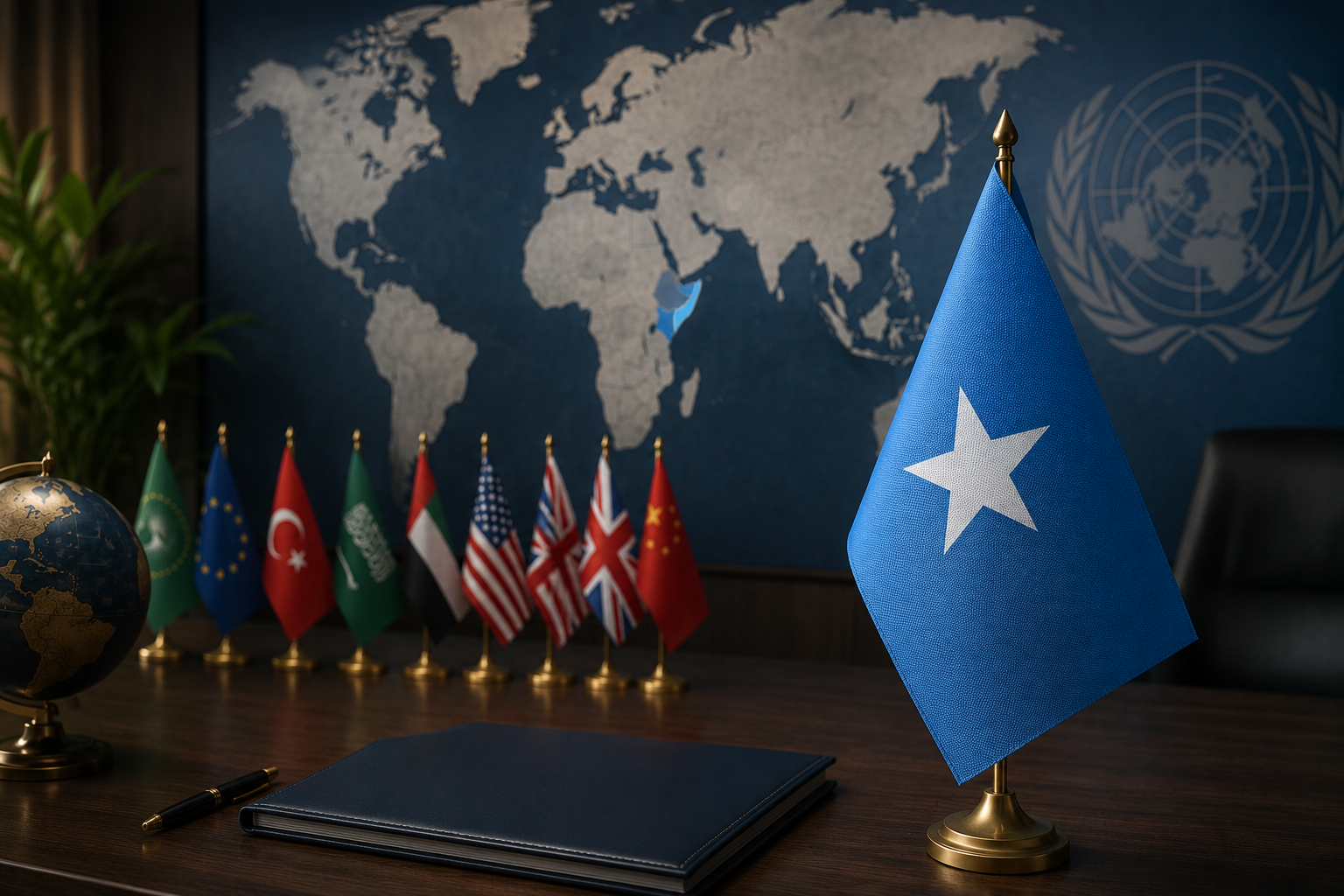
Somalia’s foreign policy is evolving as the country takes on a more active role in regional and international affairs. Its diplomatic priorities are increasingly shaped by security, economic interests, regional cooperation, maritime concerns, and the need to strengthen Somalia’s position within international institutions.
Somalia’s engagement with neighbouring countries and international partners has become increasingly important as developments across the Horn of Africa continue to reshape the regional environment.
For Somalia, diplomacy is not only about managing relationships with individual countries. It is also about protecting national interests, building strategic partnerships, and ensuring that regional developments are considered through the lens of Somalia’s sovereignty and long-term stability.
The Horn of Africa remains one of the most strategically important regions in Africa. Competition over security, trade routes, ports, natural resources, and political influence continues to affect relations between countries.
Somalia therefore faces the challenge of maintaining constructive relationships with neighbouring states while also protecting its national interests. This requires careful diplomacy, consistent engagement, and a clear understanding of Somalia’s strategic priorities.
Somalia’s international relationships also extend beyond the region. Partnerships with international organisations and global powers can support development, security, economic growth, and institutional strengthening.
The key challenge is ensuring that these partnerships contribute to Somalia’s long-term interests while allowing Somali institutions to maintain greater ownership of national priorities.
The direction of Somalia’s foreign policy will depend on how the country manages its regional relationships, responds to changing geopolitical dynamics, and translates diplomatic engagement into concrete national outcomes.
The most important question is not simply where Somalia is engaging, but what Somalia is seeking to achieve through that engagement.
Somalia is operating in a region where political, economic, and security interests are increasingly interconnected. A clear and consistent foreign policy can help Somalia navigate these pressures while strengthening its influence and protecting its national interests.
Understanding Somalia’s foreign policy therefore requires looking beyond individual diplomatic meetings and agreements. It requires examining the broader strategy, interests, and regional dynamics shaping Somalia’s place in the world.